DC's Quantum Leap: DARPA's HARQ Program Aims for a Heterogeneous Future
The global quantum computing market is projected to grow from USD 1.2 billion in 2023 to USD 6.5 billion by 2028, at a Compound Annual Growth Rate (CAGR) of 40.1% Statista (citing MarketsandMarkets). This significant expansion underscores the urgency for breakthroughs in quantum technology, prompting the Defense Advanced Research Projects Agency (DARPA) to launch its Heterogeneous Architecture for Quantum (HARQ) program on May 15, 2024. The HARQ initiative seeks to move quantum computing beyond single-qubit systems by integrating different qubit technologies, a strategy poised to accelerate the development of practical quantum computers.
Unlocking Quantum's Next Frontier: The HARQ Program
The Defense Advanced Research Projects Agency (DARPA) initiated its Heterogeneous Architecture for Quantum (HARQ) program on May 15, 2024, marking a pivotal step in the quest for scalable quantum computing. This program directly addresses a fundamental challenge in quantum information science: the limitations of current single-qubit systems. While individual qubit technologies, such as superconducting circuits, trapped ions, and photonic systems, have demonstrated impressive performance in isolation, scaling these systems to the thousands or millions of qubits required for fault-tolerant quantum computation remains a significant hurdle. DARPA's HARQ program proposes a novel solution: the integration of diverse qubit types into a single, cohesive quantum architecture.
This innovative approach recognizes that different qubit technologies excel in various aspects. For example, trapped ions offer long coherence times and high-fidelity gates, while superconducting qubits provide faster gate operations and easier integration with classical control electronics. The HARQ program aims to harness these complementary strengths by developing methods to connect and orchestrate these disparate quantum components. This strategy moves beyond incremental improvements within a single qubit platform, instead focusing on creating a robust, modular quantum computing ecosystem. The program's launch reflects a strategic shift in federal research, acknowledging that a "one-size-fits-all" approach may not be sufficient to achieve the ambitious goals set by national initiatives like the National Quantum Initiative Act (NQIA) of 2018. The NQIA authorized $1.2 billion over five years for quantum information science (QIS) research and development across federal agencies, including DARPA National Institute of Standards and Technology (NIST). The HARQ program directly aligns with this national commitment to accelerate quantum breakthroughs.
Beyond Single Qubits: HARQ's Innovative Approach to Scaling Quantum
Current quantum computing research predominantly focuses on optimizing performance within a single qubit modality. While this has led to impressive advancements, such as the 64-qubit system demonstrated by IonQ, a DC-area quantum computing company, scaling these systems to the millions of qubits needed for error-corrected, fault-tolerant computation presents immense engineering and physics challenges. The primary limitations include maintaining quantum coherence across a large number of interacting qubits and mitigating the high error rates inherent in current quantum operations. DARPA's HARQ program explicitly addresses these challenges by pioneering the integration of diverse qubit technologies, a more complex yet potentially more scalable and robust approach than solely improving single-platform qubit performance.
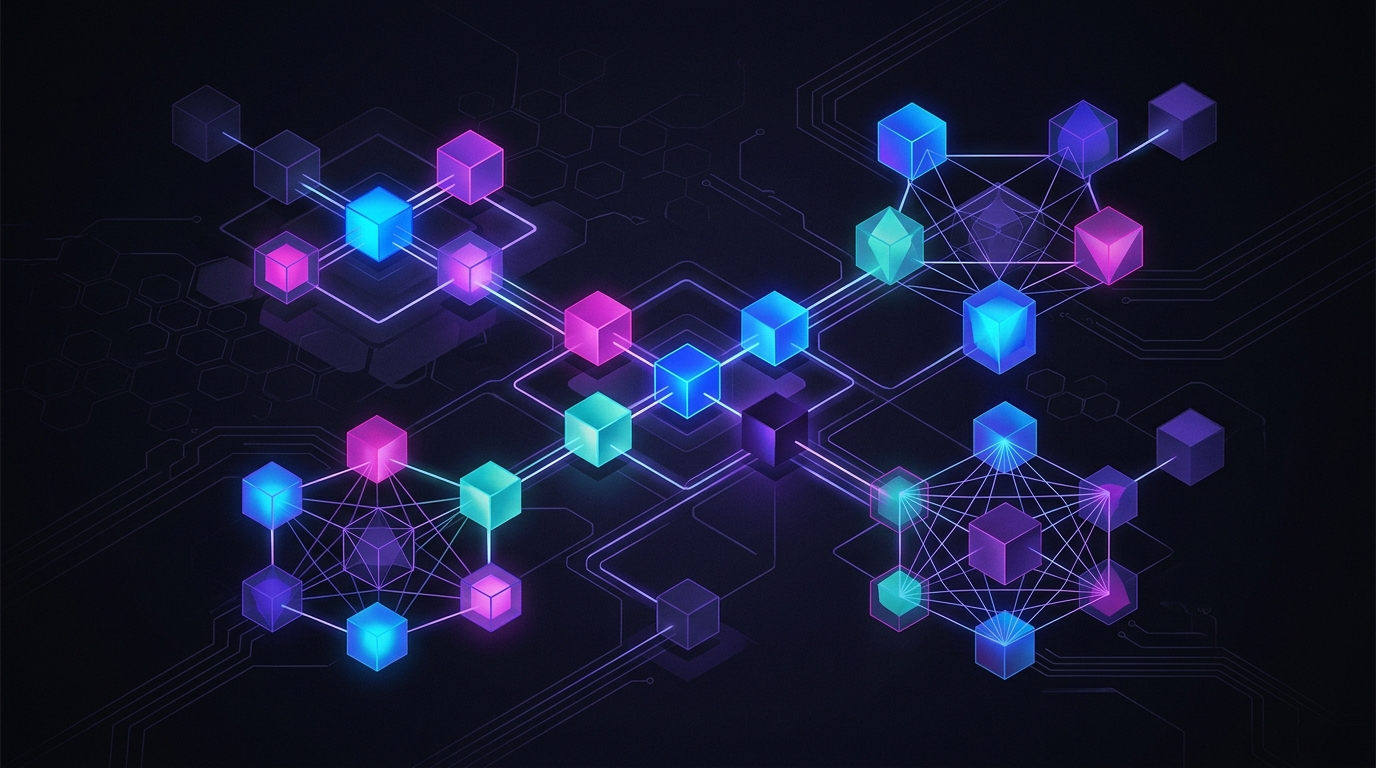
The HARQ program envisions a future where the strengths of different quantum systems are combined. For instance, a quantum computer might use trapped ions for long-distance entanglement distribution, superconducting qubits for fast local computations, and photonic qubits for inter-chip communication. This modular design allows for specialized components to handle specific tasks, potentially reducing overall system complexity and improving error resilience. The program's technical objectives include developing novel interfaces between different qubit types, creating robust quantum interconnects, and designing control architectures capable of managing heterogeneous quantum processors. Researchers involved in the HARQ initiative will explore methods for quantum state transfer between different physical systems, error correction protocols tailored for mixed architectures, and advanced packaging techniques to house these complex hybrid systems.
This strategic shift by DARPA acknowledges that no single qubit technology currently offers a clear path to universal, fault-tolerant quantum computing on its own. By fostering the development of heterogeneous architectures, HARQ aims to accelerate the timeline for achieving practical quantum advantage. The program seeks to overcome the "valley of death" between laboratory demonstrations and deployable quantum systems, providing a framework for engineers and scientists to build quantum computers that are not only powerful but also reliable and scalable. The success of HARQ could significantly impact fields ranging from cryptography and materials science to drug discovery and artificial intelligence, offering computational capabilities far beyond what classical supercomputers can achieve. The vision for this integration, moving from single-qubit limitations to robust, practical systems, is central to HARQ's mission.
CHART_PLACEHOLDER: dcs-quantum-leap-darpas-harq-program-chart-1.html
The program's emphasis on modularity and interoperability also fosters a more collaborative research environment, encouraging specialists in different qubit technologies to work together. This collaborative spirit is already evident in the DC metro area, with institutions like the University of Maryland (UMD) Joint Quantum Institute (JQI) and George Mason University actively engaged in various aspects of quantum research, from fundamental physics to quantum engineering.
A Booming Market: Global Investment and National Strategy in Quantum
The launch of DARPA's HARQ program occurs amidst a period of unprecedented growth and investment in the quantum technology sector. The global quantum computing market is projected to expand significantly, growing from USD 1.2 billion in 2023 to USD 6.5 billion by 2028, at a Compound Annual Growth Rate (CAGR) of 40.1% Statista (citing MarketsandMarkets). This forecast highlights the immense economic potential and strategic importance that nations and industries worldwide are attributing to quantum advancements. The rapid growth trajectory indicates a strong belief in quantum computing's ability to revolutionize various sectors, from finance and healthcare to defense and logistics.
Recognizing this strategic innovation--s/" title="DC's NSA Adopts Risky AI: Balancing Innovation & Security">imperative, the United States government has made substantial commitments to quantum information science (QIS) research and development. The National Quantum Initiative Act (NQIA) of 2018 authorized $1.2 billion over five years specifically for QIS R&D across federal agencies National Institute of Standards and Technology (NIST). This landmark legislation, referenced in December 2023, established a coordinated national program to accelerate quantum research, foster a skilled workforce, and ensure U.S. leadership in thicritical-infrastructure-cisa-warns-of-cyber-/" title="DC's Critical Infrastructure: CISA Warns of Cyber Threats">s critical technological domain. Federal agencies, including DARPA, NIST, and the National Security Agency (NSA), have since played crucial roles in implementing the NQIA's objectives, funding foundational research and innovative programs like HARQ.
Beyond government initiatives, private sector investment has also surged. Total private and public investment in quantum technology reached an impressive $35.5 billion by the end of 2022, with $2.5 billion invested in 2022 alone McKinsey & Company. This February 2023 report underscores the global financial backing for quantum technology development, reflecting high expectations for its future impact and commercial viability. Companies and venture capitalists are pouring capital into startups and established firms working on quantum hardware, software, and algorithms, creating a vibrant ecosystem of innovation. The convergence of robust federal funding, strategic national initiatives like the NQIA, and significant private investment creates a fertile ground for programs like HARQ to thrive, providing the necessary resources and impetus to tackle the most challenging problems in quantum computing. This collective effort aims to translate theoretical quantum advantages into tangible, real-world applications within the next decade.
What This Means for DC
The launch of DARPA's Heterogeneous Architecture for Quantum (HARQ) program on May 15, 2024, significantly strengthens the already robust quantum research ecosystem within the DC metro area. This initiative directly reinforces the region's standing as a premier hub for advanced technology research and development, fostering critical collaboration between federal agencies, leading universities, and innovative private companies.
How does HARQ Virginia Cybersecurity: CISA Rules Impact DC">impact DC's quantum landscape?DARPA, headquartered in Arlington, Virginia, is a central player in the nation's defense technology strategy, and its HARQ program will undoubtedly draw further attention and resources to the local quantum sector. The National Institute of Standards and Technology (NIST) in Gaithersburg, Maryland, a key agency under the National Quantum Initiative Act (NQIA) of 2018, will likely find new avenues for collaboration with HARQ, particularly in quantum metrology and standards development. The University of Maryland (UMD) Joint Quantum Institute (JQI), a partnership between UMD and NIST, is a global leader in quantum information science, and its researchers are well-positioned to contribute to and benefit from HARQ's focus on heterogeneous qubit integration. Similarly, George Mason University in Fairfax, Virginia, with its growing emphasis on quantum engineering and cybersecurity, provides a strong academic foundation for talent development crucial to such advanced programs.
Private sector entities in the DC area are also directly impacted. IonQ, a quantum computing company based in College Park, Maryland, which specializes in trapped-ion quantum systems, could find opportunities to integrate its technology with other qubit modalities explored by HARQ. MITRE, a not-for-profit organization that manages federally funded research and development centers, including one for the National Security Agency (NSA) in Fort Meade, Maryland, will be instrumental in applying HARQ's advancements to national security challenges, particularly in post-quantum cryptography. The NSA itself, a major employer of cybersecurity and technology professionals in the region, has a vested interest in quantum-resistant solutions, making HARQ's progress directly relevant to its mission.
What should local professionals and business owners do with this information?For professionals in the DC metro area's tech sector, the HARQ program signals a growing demand for specialized skills in quantum physics, engineering, computer science, and materials science. Individuals should consider pursuing advanced education or certifications in quantum information science, as universities like UMD and George Mason University offer relevant programs. Networking with researchers at NIST, UMD JQI, and companies like IonQ can open doors to new career opportunities.
Business owners, particularly those in defense contracting, cybersecurity, or advanced manufacturing, should explore how quantum technologies, even in their early stages, might impact their long-term strategies. Investing in R&D partnerships with local universities or engaging with federal agencies on quantum-related projects could position companies at the forefront of this emerging field. The HARQ program is poised to attract further investment and talent to the DC region, driving innovation and high-tech job growth. This creates a fertile environment for startups focused on quantum software, hardware components, or specialized services supporting heterogeneous quantum architectures. Local economic development agencies should highlight these initiatives to attract more quantum-focused businesses and talent to the DC metro area, solidifying its reputation as a global quantum innovation hub.
Sources: